The Research Team

Led by scholars. Guided by experience.

The principal investigator, dissertation committee, and advisor behind the Microdosing Vets study — with selected publications from each.

Principal Investigator

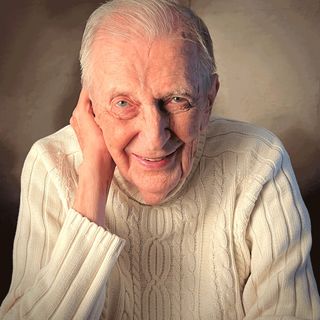
Patrick Nienaber, PhD(c)

Patrick Nienaber

Patrick Nienaber, PhD(c)

Lead Researcher

Doctoral candidate at the California Institute of Integral Studies (CIIS) exploring the effect of microdosing psychedelics on trauma through a transpersonal psychology framework. U.S. Army National Guard combat veteran of Operation Iraqi Freedom. 2023 Pat Tillman Scholar.

Researcher profile

Patrick is the principal investigator of A Soldier's Journey Home: A Triangulated Qualitative Study of the Effects of Micro-Dosing LSD on PTSD Among U.S. Combat Veterans — the first qualitative research to treat U.S. combat veterans' self-directed microdosing as primary data. The study is ethics-approved, applying reflexive thematic analysis and methodological triangulation; each participant's first-person account is paired with the perspective of a Friendly Observer who knows them well.

The work is conducted under the direction of dissertation chair Jenny Wade, PhD, at CIIS, where Patrick is a doctoral candidate in East-West Psychology with completion anticipated in 2027. Prior degrees: dual master's in herbal medicine and in complementary & alternative medicine from the American College of Healthcare Sciences (2019); bachelor's in food and nutrition with an exercise science focus from the University of Cincinnati (2007).

His standing in the population this study serves is direct, with a 19-month deployment in support of Operation Iraqi Freedom. The research has been supported by awards from the Pat Tillman Foundation Scholarship (2023) — a nationally competitive fellowship for veterans, active-duty service members, and military spouses with high potential for impact — and the Robert Joseph & Wilhelmina Ann Kranzke Research Scholarship, which supports innovative doctoral research in emerging areas of psychological science, including psychedelic studies.
The Team

Dissertation committee & advisor

Three researchers on the dissertation committee at CIIS, plus the study's informal advisor on microdosing methodology. Selected publications under each card.

Dissertation Committee

Jenny Wade

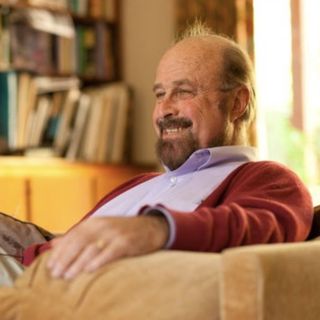
Jenny Wade, PhD

Dissertation Chair

Research psychologist, educator, and organization development consultant dedicated to the maximization of human potential individually and collectively.

Google Scholar profile →
View selected publications (9)
  1. Wade, J. (1996). Changes of mind: A holonomic theory of the evolution of consciousness. State University of New York Press. Wade's developmental theory: nine "MindSets" across the lifespan, anchored in physical substrate but not reducible to it, with transpersonal stages following but not replacing earlier ones.
  2. Wade, J. (2000). The love that dares not speak its name: Putting inner experience back into research. In T. Hart, P. L. Nelson, & K. Puhakka (Eds.), Transpersonal knowing: Exploring the horizon of consciousness (pp. 271–301). State University of New York Press.
  3. Wade, J. (2000). Mapping the courses of heavenly bodies: The varieties of transcendent sexual experience. The Journal of Transpersonal Psychology, 32(2), 103–122. atpweb.org/jtparchive/trps-32-00-02-103.pdf
  4. Wade, J. (2004). Transcendent sex: When lovemaking opens the veil. Paraview Pocket Books / Simon & Schuster.
  5. Wade, J. (2013). Transpersonal sexual experiences. In H. L. Friedman & G. Hartelius (Eds.), The Wiley-Blackwell handbook of transpersonal psychology (pp. 382–396). Wiley-Blackwell. https://doi.org/10.1002/9781118591277.ch21
  6. Wade, J. (2016). Going berserk: Battle trance and ecstatic holy warriors in the European war magic tradition. International Journal of Transpersonal Studies, 35(1), 21–38. https://doi.org/10.24972/ijts.2016.35.1.21
  7. Wade, J. (2018). After awakening, the laundry: Is nonduality a spiritual experience? International Journal of Transpersonal Studies, 37(2), 88–112. https://doi.org/10.24972/ijts.2018.37.2.88
  8. Wade, J. (2021). The varieties of spiritual states triggered by sex: A systematic review of the empirical literature. International Journal of Transpersonal Studies, 40(1). https://doi.org/10.24972/ijts.2021.40.1.58
  9. Wade, J. (2021). Going berserk, running amok, and the extraordinary capabilities and invulnerability of battle trance. International Journal of Transpersonal Studies, 40(2). https://doi.org/10.24972/ijts.2021.40.2.1 The follow-up to Wade's 2016 "Going berserk" paper, deepening her account of how combat-induced altered states produce extraordinary capabilities warriors return from without integration scaffolding. Among the most directly load-bearing pieces of her work for the Microdosing Vets study.
Stanley Krippner

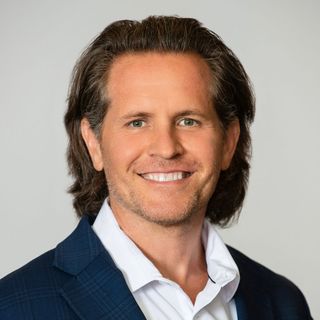
Stanley Krippner, PhD

Internal Committee Member

American psychologist and pioneer in consciousness research, cross-cultural perspectives, and non-ordinary experiences. Co-author of five books on war trauma and PTSD.

stanleykrippner.weebly.com →
View selected publications (10)
  1. Paulson, D. S., & Krippner, S. (2007). Haunted by combat: Understanding PTSD in war veterans, including women, reservists, and those coming back from Iraq. Praeger Security International. Half clinical, half memoir — Paulson is a Vietnam Marine and a psychologist. The chapter on how PTSD shows up in ordinary moments is the one most veterans remember.
  2. Feinstein, D., & Krippner, S. (1988). Personal mythology: The psychology of your evolving self. Jeremy P. Tarcher. (3rd ed., 2008, Energy Psychology Press)
  3. Krippner, S., Pitchford, D. B., & Davies, J. A. (2012). Post-traumatic stress disorder (Biographies of Disease series). Greenwood / ABC-CLIO.
  4. Lewis, J. E., & Krippner, S. (Eds.). (2016). Working with dreams and PTSD nightmares: 14 approaches for psychotherapists and counselors. Praeger.
  5. Krippner, S., & Sulla, J. (2000). Identifying spiritual content in reports from ayahuasca sessions. International Journal of Transpersonal Studies, 19(1), 59–76. https://doi.org/10.24972/ijts.2000.19.1.59
  6. Trichter, S., Klimo, J., & Krippner, S. (2009). Changes in spirituality among ayahuasca ceremony novice participants. Journal of Psychoactive Drugs, 41(2), 121–134. https://doi.org/10.1080/02791072.2009.10399905
  7. Krippner, S. (1985). Psychedelic drugs and creativity. Journal of Psychoactive Drugs, 17(4), 235–245. https://doi.org/10.1080/02791072.1985.10524328
  8. Cardeña, E., Lynn, S. J., & Krippner, S. (Eds.). (2014). Varieties of anomalous experience: Examining the scientific evidence (2nd ed.). American Psychological Association.
  9. Ullman, M., Krippner, S., & Vaughan, A. (1973). Dream telepathy: Experiments in nocturnal ESP. Macmillan.
  10. Krippner, S. (2024). A chaotic life: The memoirs of Stanley Krippner, pioneering humanistic psychologist (Vols. 1–3). University Professors Press.
Grace Blest-Hopley

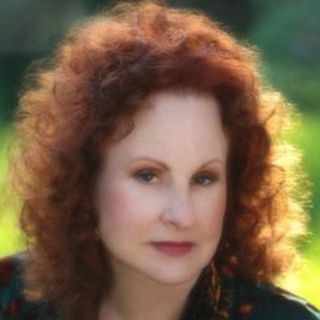
Grace Blest-Hopley, PhD

External Committee Member

Researcher in the neurochemical and neurofunctional underpinnings of cannabis, cannabinoids, and psychedelics. Research Director at Heroic Hearts Project.

hystelica.com →
View selected publications (9)
  1. Blest-Hopley, G., Giampietro, V., & Bhattacharyya, S. (2018). Residual effects of cannabis use in adolescent and adult brains — A meta-analysis of fMRI studies. Neuroscience & Biobehavioral Reviews, 88, 26–41. https://doi.org/10.1016/j.neubiorev.2018.03.008 The foundational meta-analysis establishing that residual functional alterations persist after abstinence, particularly in adolescent-onset users.
  2. Blest-Hopley, G., Giampietro, V., & Bhattacharyya, S. (2018). Regular cannabis use is associated with altered activation of central executive and default mode networks even after prolonged abstinence in adolescent users: Results from a complementary meta-analysis. Neuroscience & Biobehavioral Reviews, 96, 45–55. https://doi.org/10.1016/j.neubiorev.2018.10.026
  3. Blest-Hopley, G., Colizzi, M., Giampietro, V., & Bhattacharyya, S. (2020). Is the adolescent brain at greater vulnerability to the effects of cannabis? A narrative review of the evidence. Frontiers in Psychiatry, 11, 859. https://doi.org/10.3389/fpsyt.2020.00859
  4. Blest-Hopley, G., Colizzi, M., Prata, D., Giampietro, V., Brammer, M., McGuire, P., & Bhattacharyya, S. (2020). Adolescent-onset heavy cannabis use associated with significantly reduced glial but not neuronal markers and glutamate levels in the hippocampus. Addiction Biology, 25(5), e12827. https://doi.org/10.1111/adb.12827
  5. Blest-Hopley, G., Giampietro, V., & Bhattacharyya, S. (2020). A systematic review of human neuroimaging evidence of memory-related functional alterations associated with cannabis use complemented with preclinical and human evidence of memory performance alterations. Brain Sciences, 10(2), 102. https://doi.org/10.3390/brainsci10020102
  6. Blest-Hopley, G., Colizzi, M., Giampietro, V., & Bhattacharyya, S. (2020). Disrupted parahippocampal and midbrain function underlie slower verbal learning in adolescent-onset regular cannabis use. Psychopharmacology, 237(4), 1041–1056. https://doi.org/10.1007/s00213-019-05407-9
  7. Gunasekera, B., Wilson, R., O'Neill, A., Blest-Hopley, G., O'Daly, O., & Bhattacharyya, S. (2022). Cannabidiol attenuates insular activity during motivational salience processing in patients with early psychosis. Psychological Medicine, 53(10), 4732–4741. https://doi.org/10.1017/S0033291722001672
  8. Bhattacharyya, S., & Blest-Hopley, G. (Eds.). (2023). Editorial: Appropriateness and safety of using cannabinoid and psychedelic medicines as treatments for psychiatric disorders. Frontiers in Psychiatry, 14, 1191970. https://doi.org/10.3389/fpsyt.2023.1191970
  9. Blest-Hopley, G. (2019). Functional and metabolic effects of cannabis use on the adolescent brain [Doctoral dissertation, King's College London]. Department of Psychosis Studies, IoPPN.

Advisor

James Fadiman

James Fadiman, PhD

Informal Advisor

Widely regarded as the father of modern microdosing research. Harvard BA, Stanford PhD in Psychology. Co-founder of the Institute of Transpersonal Psychology. Collecting microdosing reports from thousands of participants across 59 countries since 2010.

jamesfadiman.com →
View selected publications (10)
  1. Harman, W. W., McKim, R. H., Mogar, R. E., Fadiman, J., & Stolaroff, M. J. (1966). Psychedelic agents in creative problem-solving: A pilot study. Psychological Reports, 19(1), 211–227. https://doi.org/10.2466/pr0.1966.19.1.211 The 27-subject IFAS study that established moderate LSD/mescaline doses in structured problem-solving protocols outside the psychiatric frame. The intellectual seed of everything that followed.
  2. Fadiman, J. (2011). The psychedelic explorer's guide: Safe, therapeutic, and sacred journeys. Park Street Press.
  3. Fadiman, J., & Korb, S. (2019). Might microdosing psychedelics be safe and beneficial? An initial exploration. Journal of Psychoactive Drugs, 51(2), 118–122. https://doi.org/10.1080/02791072.2019.1593561 The largest microdosing survey published — over 1,000 respondents across 59 countries — and the methodological defense of citizen-scientist self-experimentation as a research design.
  4. Fadiman, J., & Korb, S. (2016). Microdose research: Without approvals, control groups, double-blinds, staff or funding. In R. Adams, A. Waldstein, B. Sessa, D. Luke, & D. King (Eds.), Psychedelic Press XV (pp. 22–34). Psychedelic Press UK.
  5. Fadiman, J., & Gruber, J. (2025). Microdosing for health, healing, and enhanced performance. St. Martin's Essentials.
  6. Fadiman, J., & Gruber, J. (2020). Your symphony of selves: Discover and understand more of who we are. Park Street Press.
  7. Frager, R., & Fadiman, J. (2012). Personality and personal growth (7th ed.). Pearson.
  8. Fadiman, J. (2005). Psychedelic research revisited. Journal of Transpersonal Psychology, 35(2), 111–125. atpweb.org/jtparchive/trps-35-03-02-111.pdf
  9. Harman, W. W., & Fadiman, J. (1970). Selective enhancement of specific capacities through psychedelic training. In B. Aaronson & H. Osmond (Eds.), Psychedelics: The uses and implications of hallucinogenic drugs (pp. 239–257). Doubleday.
  10. Fadiman, J. (1965). Behavior change following psychedelic (LSD) therapy [Doctoral dissertation, Stanford University].

If our study fits, we'd like to hear from you.

Five-minute eligibility screening. You'll talk with a fellow combat veteran researcher.

Take the 5-Min Screening →